How Kwamin Wallace Combines Leadership, Advocacy, and Healthcare Innovation

In today’s rapidly evolving healthcare landscape, effective leadership requires more than operational expertise. It demands vision, compassion, advocacy, and the ability to innovate solutions that address the real needs of communities. Kwamin Wallace exemplifies this modern approach to leadership by integrating healthcare innovation, community advocacy, and strategic leadership into a unified mission focused on improving public health outcomes.
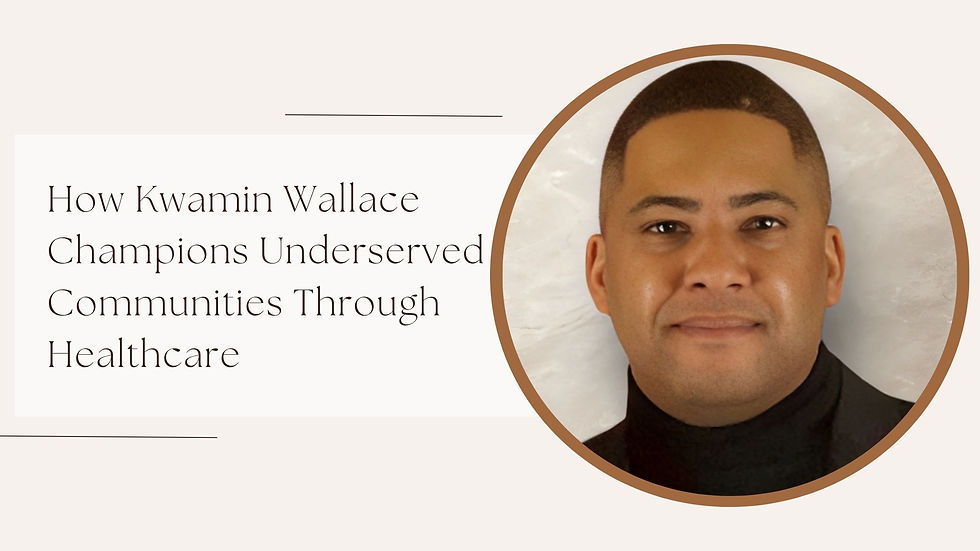
With more than 25 years of experience across public and private sectors, Kwamin Wallace has emerged as a respected healthcare leader whose work demonstrates how innovation and advocacy can strengthen healthcare systems while creating equitable access for underserved populations. His leadership philosophy centers on collaboration, sustainability, and long-term community impact.
The Foundation of Transformational Leadership
Strong leadership in healthcare is not solely about managing systems or overseeing operations. It is about understanding the human side of healthcare and recognizing the broader social challenges that influence patient outcomes. Kwamin Wallace has consistently demonstrated the ability to lead with both strategy and empathy, creating initiatives that prioritize people as much as performance.
His leadership approach focuses on:
Building collaborative partnerships
Empowering underserved communities
Driving operational excellence
Promoting equitable healthcare access
Encouraging innovation in public health initiatives
This balanced leadership style allows Wallace to bridge the gap between healthcare organizations, community stakeholders, and public health advocates. By combining operational knowledge with a deep understanding of community health challenges, he creates programs that are both impactful and sustainable.
Advocacy as a Core Leadership Principle
One of the defining aspects of Kwamin Wallace’s professional journey is his commitment to advocacy. In healthcare, advocacy plays a critical role in ensuring that vulnerable populations receive access to resources, education, and lifesaving care. Wallace recognizes that healthcare disparities often stem from systemic barriers, and addressing those barriers requires active leadership and public engagement.
Through his work with community health initiatives, he has contributed to programs designed to:
Raise awareness about chronic health conditions
Improve access to healthcare services
Strengthen community education efforts
Support diversity and inclusion in healthcare outreach
Enhance public trust in healthcare systems
Advocacy, in Wallace’s perspective, extends beyond policy discussions. It involves direct community engagement, listening to underserved populations, and developing solutions tailored to their specific needs. This hands-on approach strengthens relationships between healthcare organizations and the communities they serve.
Driving Innovation in Healthcare Systems
Healthcare innovation has become essential in addressing modern public health challenges. From improving patient engagement to expanding access to preventive care, innovation allows organizations to operate more effectively while improving outcomes. Kwamin Wallace combines strategic leadership with forward-thinking innovation to create scalable healthcare solutions.
Innovation in healthcare leadership often includes:
Community-Centered Healthcare Models
Rather than applying one-size-fits-all solutions, Wallace supports community-centered strategies that account for cultural, social, and economic realities. This approach helps healthcare initiatives become more accessible and effective for diverse populations.
Strategic Partnerships
Collaborative partnerships are critical for expanding healthcare outreach and improving public health infrastructure. Wallace has demonstrated the importance of bringing together healthcare providers, nonprofits, community organizations, and public institutions to create unified solutions that maximize impact.
Public Health Education
Innovation is not limited to technology alone. Educational outreach programs play a major role in preventive healthcare and long-term wellness. Wallace emphasizes awareness campaigns and educational initiatives that empower communities to make informed healthcare decisions.
Program Development and Sustainability
Successful healthcare initiatives require long-term sustainability. Wallace’s leadership approach focuses on building programs that continue delivering value over time through strong organizational structures, measurable outcomes, and strategic planning.
Balancing Business Leadership and Public Health Impact
Healthcare leadership today requires balancing organizational goals with meaningful community impact. Kwamin Wallace effectively combines business strategy with public health advocacy, ensuring that healthcare initiatives remain both operationally efficient and socially responsible.
This balance is especially important in today’s healthcare environment, where organizations face increasing pressure to improve patient outcomes while managing limited resources. Wallace’s experience across multiple sectors allows him to navigate these challenges while maintaining a strong commitment to ethical leadership and equitable care.
His ability to align strategic objectives with community-focused initiatives highlights the growing importance of socially conscious leadership in healthcare.
The Importance of Inclusive Healthcare Leadership
Inclusive leadership is becoming one of the most important factors in healthcare innovation. Communities are diverse, and healthcare systems must reflect that diversity in both leadership and service delivery. Wallace advocates for inclusive engagement strategies that ensure underserved voices are represented in healthcare conversations.
Inclusive leadership creates several long-term benefits:
Greater community trust
Improved healthcare participation
Stronger patient engagement
Better communication across diverse populations
More effective healthcare solutions
By prioritizing inclusion, healthcare leaders can create environments where communities feel heard, respected, and supported.
Lessons from Kwamin Wallace’s Leadership Approach
Healthcare professionals and emerging leaders can learn valuable lessons from Kwamin Wallace’s leadership model. His career demonstrates that impactful healthcare leadership requires more than technical expertise. It requires a commitment to advocacy, innovation, collaboration, and service.
Key leadership lessons include:
Lead with purpose and empathy
Prioritize community engagement
Embrace innovation strategically
Build sustainable partnerships
Advocate for equitable healthcare access
Focus on long-term public health impact
These principles not only strengthen healthcare organizations but also create meaningful change within communities.
Conclusion
Kwamin Wallace represents a modern model of healthcare leadership that combines advocacy, innovation, and strategic vision. His work demonstrates how leaders can create lasting impact by focusing on community-centered solutions, inclusive healthcare practices, and collaborative public health initiatives.
As healthcare systems continue to evolve, leaders who can integrate innovation with compassion and advocacy will play a vital role in shaping healthier communities. Kwamin Wallace’s leadership journey serves as an example of how purpose-driven leadership can transform healthcare outcomes while advancing equity, trust, and sustainability across the public health landscape.


Comments